For thousands of years, silver has occupied a unique place in the history of medicine. Long before microscopes revealed bacteria or antibiotics transformed modern healthcare, people across the world noticed something remarkable: food and water stored in silver vessels seemed to stay fresher longer, wounds treated with silver often fared better than expected, and silver became associated with cleanliness, preservation, and protection.
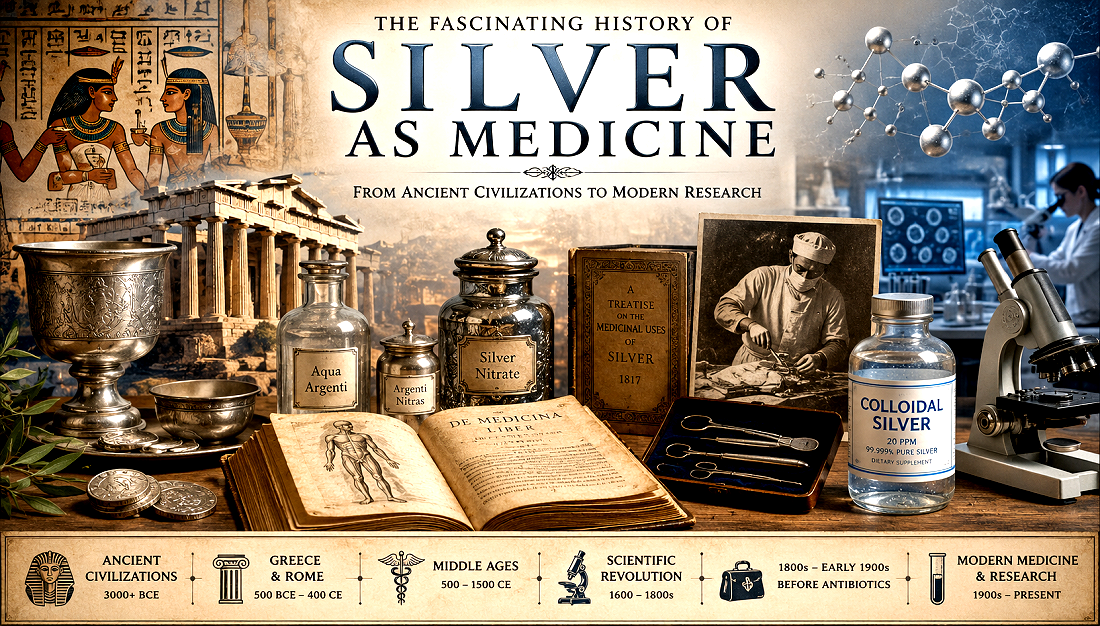
From the temples of ancient Egypt to the laboratories of modern medical researchers, silver has remained one of humanity’s most enduring natural substances. While its role has changed dramatically over time, its story continues to fascinate physicians, historians, scientists, and natural health enthusiasts alike.
Ancient Beginnings
Archaeological evidence suggests that silver was prized long before recorded medical texts existed. Beyond its beauty and rarity, many early civilizations valued silver for practical reasons they could observe, even if they could not explain them.
Ancient Egypt
The Egyptians regarded silver as both precious and useful. Historical records suggest that silver was incorporated into various medicinal preparations and was sometimes used in wound care. Although they knew nothing of microorganisms, Egyptian healers recognized that certain metals appeared to help maintain cleanliness and preserve health.
Ancient Greece
Greek physicians, including the influential physician Hippocrates, wrote about the treatment of wounds and ulcers using preparations that included silver. His observations helped establish silver as a respected therapeutic material within early Western medicine.
The Greeks also stored drinking water, wine, and vinegar in silver containers, believing these vessels helped maintain freshness during long voyages.
Ancient Rome
The Romans expanded many Greek medical traditions. Silver vessels became common among wealthy households, not only because they symbolized status but also because they appeared to preserve liquids more effectively than other containers available at the time.
Roman military physicians reportedly incorporated silver into aspects of wound care for soldiers serving throughout the empire.
Silver Across the Ancient World
Silver’s reputation extended far beyond the Mediterranean.
In India, practitioners of traditional medicine developed preparations containing purified silver, known as Rajata Bhasma, which continue to be discussed within some branches of traditional Ayurvedic practice today.
Traditional Chinese medicine also documented various medicinal uses for silver, while cultures throughout Asia, the Middle East, and Europe often placed silver coins into water, milk, or wine containers in an effort to prolong freshness.
Although these cultures developed independently, many arrived at similar practical observations regarding silver’s preservative qualities.
The Middle Ages
During the Middle Ages, silver remained closely associated with cleanliness and health.
European nobility frequently ate from silver plates, drank from silver goblets, and used silver utensils. While these practices largely reflected wealth and prestige, historians have long noted that they may also have offered incidental hygienic benefits.
Travelers often carried silver coins that could be dropped into water containers during extended journeys. Whether motivated by tradition, observation, or both, silver became woven into everyday practices involving food and water.
The Scientific Revolution
The seventeenth and eighteenth centuries ushered in a more systematic approach to scientific inquiry. Physicians and chemists began studying metals more carefully, including silver.
Although the microbial world had not yet been fully understood, silver continued attracting attention because of its apparent ability to help preserve solutions and reduce spoilage.
As chemistry advanced, researchers developed new silver compounds with increasingly specialized applications.
The Nineteenth Century: Silver Enters Modern Medicine
The nineteenth century marked a turning point.
As the work of Louis Pasteur and Robert Koch established the germ theory of disease, physicians began searching for substances capable of limiting microbial growth.
Silver quickly became one of the most promising candidates.
Medical journals from the late 1800s contain numerous references to silver compounds used in hospitals, surgical practice, ophthalmology, obstetrics, and wound care.
Physicians experimented with various forms, including:
- Silver nitrate
- Protein-bound silver compounds
- Colloidal silver preparations
- Topical antiseptic solutions
These applications represented some of the earliest scientifically guided antimicrobial therapies.
Before Antibiotics
Prior to the introduction of sulfa drugs in the 1930s and penicillin in the 1940s, silver occupied an important place in medicine.
It was discussed for use in managing:
- Wounds
- Burns
- Eye infections
- Respiratory infections
- Urinary tract infections
- Surgical antisepsis
- Obstetric care
Different silver compounds served different purposes, and physicians selected formulations according to the condition being treated.
Although treatment outcomes varied, silver was widely respected as one of the era’s most valuable antimicrobial tools.
The Antibiotic Revolution
The discovery and widespread adoption of antibiotics dramatically changed medicine.
These new drugs were often faster acting, easier to administer, and highly effective against many bacterial infections. As a result, most internal medicinal uses of silver gradually declined within conventional healthcare.
Silver never disappeared completely, however.
Instead, its role shifted.
Silver in Modern Medicine
Today, silver remains an established component of several areas of modern healthcare.
Examples include:
- Silver-containing wound dressings
- Burn care products
- Antimicrobial surgical dressings
- Catheter coatings
- Orthopedic implant coatings
- Selected medical device surfaces
These applications reflect continuing scientific interest in silver’s antimicrobial properties, particularly for reducing microbial colonization on surfaces and in wound management.
Researchers continue to investigate silver chemistry, delivery systems, and materials science in a variety of medical settings.
Colloidal Silver and Contemporary Discussion
Interest in colloidal silver has also persisted outside mainstream medicine.
Natural alternative specialists—including naturopaths, folk medicine practitioners, homeopaths, and other holistic clinicians—often reference both historical experience and modern laboratory research when discussing colloidal silver.
Supporters point to centuries of traditional use and ongoing scientific investigation into silver’s antimicrobial characteristics.
At the same time, regulatory agencies emphasize that colloidal silver products marketed as dietary supplements are not approved to diagnose, treat, cure, or prevent disease. Scientific evidence varies considerably depending on the specific condition, formulation, and type of study being examined.
Understanding these distinctions helps place both historical and contemporary discussions into proper context.
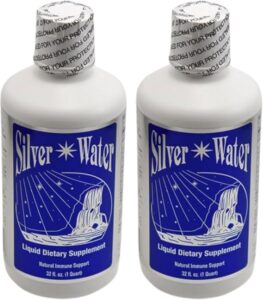
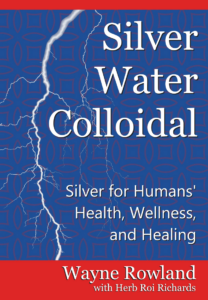
Wayne Rowland and the Modern Silver Water Tradition
Among those who helped sustain public interest in colloidal silver was Wayne Rowland, whose work focused on producing high-purity silver water using carefully controlled manufacturing methods.
Wayne emphasized simplicity, consistency, and quality while encouraging people to educate themselves about silver’s long and remarkable history.
For many who encountered his work, silver water represented not only a product but also a continuation of a tradition that stretches back thousands of years—a tradition built on observation, curiosity, and humanity’s enduring search for natural ways to support health.
Looking Ahead
The history of silver as medicine is far from finished.
New materials science, nanotechnology, antimicrobial coatings, wound-care innovations, and biomedical engineering continue to expand scientific understanding of this remarkable element.
Whether viewed through the lens of history, modern medicine, or natural health traditions, silver remains one of the most studied and enduring substances in the story of human healthcare.
Its role has evolved over time, but its legacy continues to inspire researchers, healthcare professionals, historians, and individuals seeking to better understand one of nature’s most fascinating elements.
Leave a Reply